
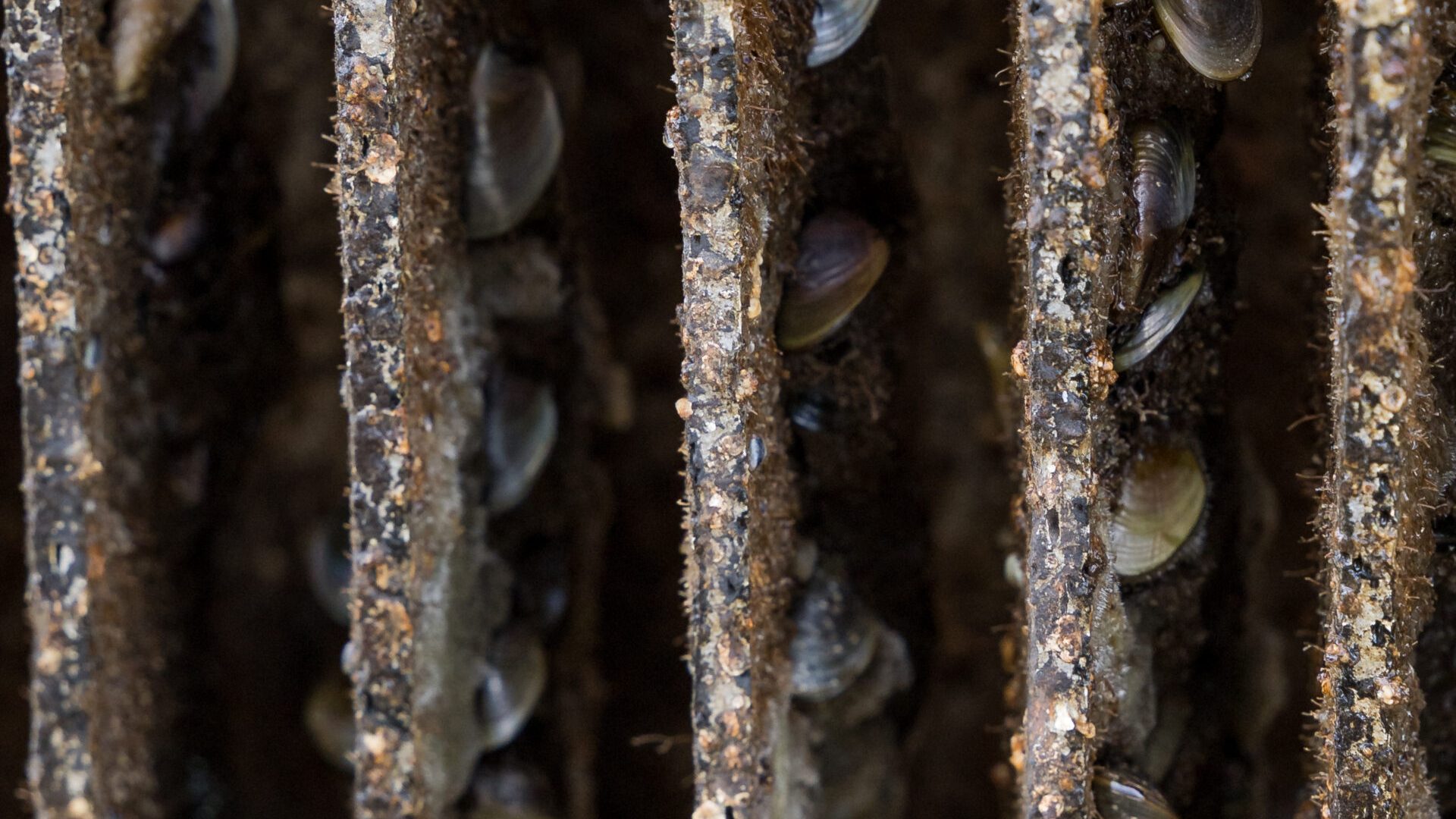
October 2024. First confirmed golden mussel detection in North America, in the Sacramento-San Joaquin Delta near the Port of Stockton. What happened over the following year is the closest thing infrastructure owners outside California have to a preview.
California’s water system is unusually interconnected. The State Water Project and Central Valley Project physically link the Delta to reservoirs, canals, and aqueducts across the state. That connectivity makes the system efficient. It also turned out to be a fast lane for a new invasive species. Within weeks of the initial detection, golden mussels were confirmed at O’Neill Forebay, in the California Aqueduct, and in the Contra Costa Canal. Within about a year, confirmed spread reached Riverside County, hundreds of miles from where it started, almost entirely through the connected conveyance system rather than separate introductions.
Agencies moved quickly once they saw the pattern. Water authorities expanded eDNA and larval monitoring, in some cases testing entire canal systems instead of a handful of sample points. State agencies ran facility risk assessments and treatment trials across several methods at once: potassium chloride, chlorine, copper, hot water, UV. New funding opened specifically for invasive mussel response, because agencies recognized this would take sustained investment rather than a single reaction.
Compare that to zebra and quagga mussels reaching the Great Lakes. They spread fast too, but mostly through natural waterway connections and ballast water between separate water bodies. Golden mussels moved through one deliberately interconnected system, which compressed a multi-year spread pattern into about twelve months. Different mechanism. Same outcome: a rapidly expanding footprint that outran the response.
Any water system with interconnected reservoirs, canals, or aqueducts should expect the same dynamic if golden mussels reach it. Waiting for a local sighting before starting to monitor means beginning the response months into an already-established population. That’s what California’s timeline shows. Hydraulic connection to a known-exposed water body is a risk factor on its own, whether or not there’s been a local detection yet, and funding or regulatory frameworks will almost always lag behind the actual spread.
ASI has tracked this pattern before, in the Great Lakes, and it’s playing out again in California on a shorter timeline. Facilities that wait for their own local proof tend to be a year or two behind the ones that started watching connected systems instead.
ASI Marine · BIO
Invasive Mussel Risk Self-Assessment
Where does your facility stand on exposure and preparedness?
A 3-minute assessment ASI uses to scope water infrastructure across the West. Your water source sets your exposure; your plan and monitoring set your preparedness. The two are shown separately, on purpose, so one doesn't distort the other.
Takes about 3 minutes · Your results are shown immediately
Step 1 of 5Location & facility
Narrows the water-source options in the next step to what's relevant to your state. Not scored on its own.
Step 3 of 5Mitigation plan: preparedness
Step 4 of 5Monitoring: preparedness
Step 5 of 5Get your results
Almost there. Let's match you with the right next step.
Your exposure and preparedness profile is ready. Tell us what would help most, and where to send it.
Where should we send your results?
| Prepared Now | Reactive Later | |
|---|---|---|
| Timing | Before confirmed presence | After mussels are established |
| What's involved | Risk assessment completed, a plan in place, a monitoring routine | Intake, pipe, treatment retrofits, flow issues, potential shutdowns |
| Typical driver | Scheduled upgrade | Emergency response |
| Who's involved | Your team, on your timeline | Contractors, regulators, emergency budget approval |
"Facilities that assess their risk and monitor before a detection are making planned, lower-cost decisions. Facilities that wait are making emergency, higher-cost decisions. The biology doesn't change, the timing does."
We will contact you about your request.
A specialist will follow up using the details you provided. You've also been emailed a copy of this summary.